
Active Recovery vs. Complete Rest: How to Choose Your Strategy
Deciding between active recovery vs. complete rest is a common dilemma for anyone training regularly, as both strategies play distinct roles in physical development. While high-intensity training breaks down muscle fibers and taxes the nervous system, recovery is the period when your body actually adapts, repairs, and grows stronger. Choosing the right approach depends on your specific training volume, the intensity of your previous sessions, and how your body feels on a given day. Understanding the mechanics of these two methods allows you to build a more sustainable routine that balances performance gains with long-term injury prevention.
Key Takeaways

- Complete rest is essential when you feel genuine burnout, systemic exhaustion, or significant joint pain.
- Active recovery increases blood flow to sore muscles, which helps move metabolic waste products through the body.
- Low-intensity movement should keep your heart rate elevated only slightly, never approaching a training threshold.
- Tracking your resting heart rate and sleep quality can help you decide which recovery style you need.
- Over-relying on active recovery can sometimes lead to cumulative fatigue if you don’t allow for full days off.
When Should You Choose Complete Rest?
Complete rest involves avoiding all structured exercise to allow your body to reset. This isn’t just about muscle recovery; it’s about nervous system restoration and hormonal balance. When you feel “flat” during workouts, lose your motivation, or experience persistent muscle soreness that doesn’t improve after a day or two, complete rest is often the most intelligent path forward.
Warning: If you experience sharp, localized pain that persists during daily activities, don’t attempt to “work through it” with active recovery; instead, consult a healthcare provider to rule out an injury.
Signs You Need Total Down Time
- Consistent difficulty falling asleep despite feeling physically exhausted.
- A noticeable increase in your morning resting heart rate.
- Persistent irritability or a lack of mental focus.
- A sudden drop in strength or power output during routine lifts.
- Inflammation in the tendons or joints that remains painful during light movement.
Benefits of Integrating Active Recovery
Active recovery utilizes low-intensity movement to facilitate the body’s repair processes. By engaging in light physical activity, you encourage systemic circulation. This improved blood flow helps deliver oxygen and nutrients to damaged tissues, which may assist in a more efficient removal of metabolic byproducts. According to the American College of Sports Medicine, moderate exercise can help regulate immune function, which is critical for athletes undergoing heavy training cycles.
Comparing Recovery Strategies
| Strategy | Primary Goal | Intensity Level | Best Used When |
|---|---|---|---|
| Complete Rest | Nervous system reset | Zero | Overtraining or injury |
| Active Recovery | Blood flow stimulation | Very Low | Minor muscle soreness |
| Light Stretching | Mobility maintenance | Minimal | Tightness after lifting |
| Deloading | Fatigue management | Moderate | Planned training cycles |
Is Active Recovery Better Than Rest?

Whether one is “better” than the other is a matter of context rather than superiority. Complete rest is a tool for systemic healing, whereas active recovery is a tool for metabolic flushing.
If you have been training at a high intensity for several weeks, a day of complete rest is often superior to active recovery because it gives your endocrine system a chance to normalize. Conversely, if you’re simply experiencing mild delayed-onset muscle soreness (DOMS), active recovery is often more effective at reducing stiffness than sitting on the couch all day.
Pro Tip: Use the “talk test” during active recovery sessions; if you can’t hold a full conversation comfortably, you’re moving too quickly and have entered the realm of training rather than recovery.
Recommended Active Recovery Exercises
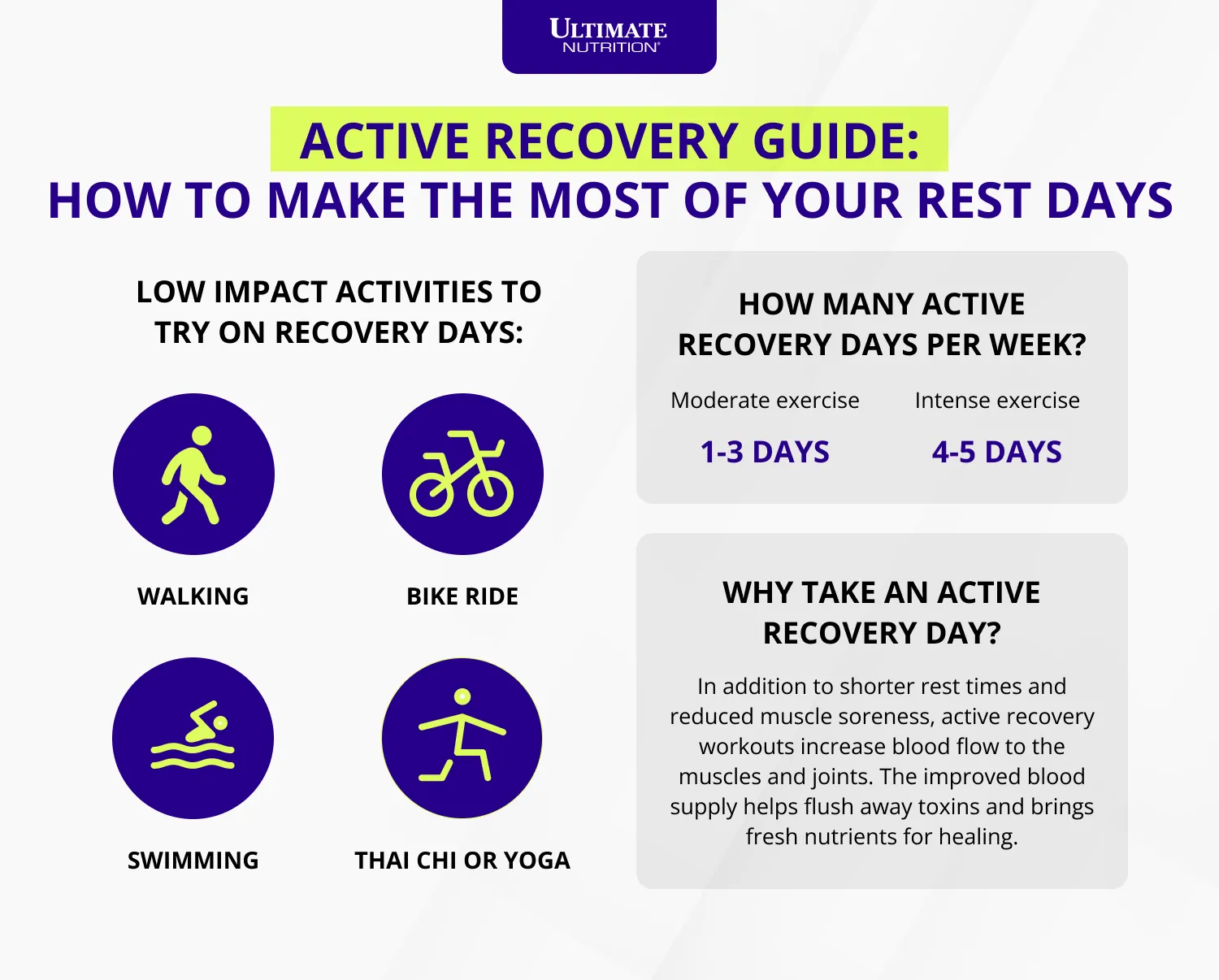
The best activities for recovery are those that don’t add extra stress to the muscle groups you just trained. Keep these sessions short, typically lasting between twenty and thirty minutes.
- Easy walking on flat terrain.
- Gentle swimming or water treading.
- Casual cycling on a stationary bike at a low resistance.
- Dynamic mobility drills or light yoga.
- Foam rolling to address specific muscle tightness.
How to Plan Your Weekly Schedule
Consistency in recovery is just as important as consistency in training. Many athletes find success by incorporating one day of active recovery and one day of complete rest per week. This structure ensures that you’re never pushing your body to the point of total collapse while still maintaining the habit of daily movement.
| Training Day | Recovery Type | Typical Duration |
|---|---|---|
| High Intensity | Complete Rest | 24 Hours |
| Moderate Intensity | Active Recovery | 20-30 Minutes |
| High Intensity | Active Recovery | 20 Minutes |
| Low Intensity | Complete Rest | 24 Hours |
Managing Mental Fatigue and Burnout
Physical recovery is only one side of the coin; mental burnout is equally common. If you find that the thought of going to the gym causes anxiety or dread, you should prioritize complete rest. Removing the pressure to “do something” for your fitness can help restore your psychological drive. When you return to training after a day of doing absolutely nothing, you’ll likely find that your focus and intensity levels are significantly higher.
Common Recovery Mistakes to Avoid
Many people fall into the trap of “junk volume” during their recovery days. They might go for a run that’s too fast or lift weights that are too heavy, effectively turning a recovery session into an unplanned training session. This prevents the body from ever reaching a state of deep restoration.
Typical Errors
- Treating an active recovery day as a “light workout.”
- Ignoring the need for sleep as the primary form of recovery.
- Failing to fuel the body adequately on rest days.
- Over-stretching tight muscles, which can cause further irritation.
When to Consult a Professional
If you feel that your recovery is consistently poor despite taking regular days off, you may be dealing with more than just exercise fatigue. Persistent exhaustion, chronic pain, or significant changes in your health should be evaluated by a doctor or a sports physical therapist. They can help identify whether your symptoms are related to training volume, underlying medical issues, or nutritional deficiencies that can’t be fixed by simply resting more.
Frequently Asked Questions
Can I do yoga on a rest day?
Yes, provided the yoga is restorative or gentle. Avoid “power” or “hot” yoga classes that push your heart rate high or require significant muscular exertion. The goal is to improve circulation and reduce tension, not to add more stress to your muscles. If you feel like you’re working hard, you have moved past recovery and into a training session.
How do I know if I am overtrained?
Overtraining is characterized by a plateau in performance, persistent fatigue, sleep disturbances, and a weakened immune system. If you find that you’re getting sick more often, feeling unmotivated, or seeing your lifts decline despite your best efforts, you’re likely overtrained. At this stage, complete rest is mandatory, often for several days or even a week, to allow your central nervous system to recover.
Should I eat less on rest days?
You should adjust your caloric intake based on your energy expenditure, but never drastically restrict calories. Your body needs fuel to repair tissues. Focus on high-quality protein and complex carbohydrates to support muscle synthesis and replenish glycogen stores. You don’t need the same volume of food as you would on a high-intensity training day, but you still need sufficient nutrition to aid the recovery process.
Does foam rolling count as active recovery?
Foam rolling is a form of self-myofascial release that can be a great component of an active recovery day. It helps improve blood flow and can temporarily alleviate the sensation of stiffness in your muscles. However, it shouldn’t be the only thing you do. Combine it with light movement, like walking, to get the best results for your muscles and connective tissues.
How long should an active recovery session last?
An active recovery session should typically last between twenty and thirty minutes. The primary objective is to get your blood moving without inducing systemic fatigue. If you go too long, you risk adding to your total training load rather than reducing it. Keep the session short, keep the intensity very low, and stop as soon as you feel a light “glow” from increased circulation.
Is sleeping the best form of recovery?
Sleep is the most potent recovery tool available. During deep sleep, your body releases growth hormones that are essential for muscle repair and tissue regeneration. No amount of foam rolling or light walking can replace the benefits of seven to nine hours of quality sleep. If you aren’t sleeping well, your recovery will be compromised regardless of whether you choose active recovery or complete rest.
Conclusion
Prioritizing your recovery is the most effective way to ensure long-term progress in any fitness program. Whether you choose a day of absolute stillness or a gentle walk to promote circulation, listen to the signals your body provides. Start by tracking your sleep and resting heart rate this week to determine which recovery style best matches your current physical needs.



One Comment