
Morning vs. Evening Workouts: Which Is Better for Your Goals | Fit Life Boost
Deciding between a workout at dawn or dusk can feel like a secondary concern when you’re just trying to build a consistent habit, but choosing the right time often determines whether you actually show up or skip your session. Most people find that the debate over morning vs. evening workouts: which is better? Depends less on biological perfection and more on the unique demands of their personal schedule, energy levels, and long-term health objectives. By understanding how your body reacts to exercise at different points in the day, you can align your training with your natural rhythm to improve performance and adherence.
Key Takeaways

- Morning sessions often foster better long-term consistency by removing the risk of workday fatigue or last-minute interruptions.
- Evening workouts typically allow for higher intensity, as your core body temperature is naturally higher and your muscles are looser.
- Prioritize your sleep quality; avoid high-intensity exercise within one hour of bedtime if you struggle with falling asleep.
- Use your chronotype—whether you’re a natural early bird or a night owl—to dictate your training window.
- Consistency is the ultimate metric for success, regardless of the specific hour you choose to exercise.
Why Time of Day Matters
Your body operates on a circadian rhythm, an internal process that regulates the sleep-wake cycle and repeats roughly every 24 hours. This rhythm influences your heart rate, blood pressure, and core temperature, all of which play a role in how you perform during physical exertion. While you can train at any time, acknowledging these physiological shifts can help you optimize your output.
| Factor | Morning Performance | Evening Performance |
|---|---|---|
| Core Temperature | Lower (needs warmup) | Higher (ready to move) |
| Mental Focus | High (no work stress) | Variable (fatigue factor) |
| Muscle Strength | Moderate | Peak potential |
| Recovery Speed | Efficient | Enhanced post-workout |
The Case for Morning Exercise
Training before the sun peaks is a favorite for those who struggle with procrastination. When you exercise first thing, you bypass the “decision fatigue” that accumulates throughout a standard workday. Once your session is finished, you have already checked off your primary health goal, leaving no room for late-afternoon meetings or social obligations to derail your progress.
Physiological Benefits of Morning Training
Starting your day with movement can improve your mood and mental clarity. Exercise triggers the release of endorphins, which can help you navigate the stresses of the day with a more stable temperament. Furthermore, morning exercise is often associated with better metabolic health, as regular physical activity guidelines suggest that consistent movement supports long-term weight management and cardiovascular wellness.
Practical Tips for Early Risers
- Prepare your workout clothes and gear the night before to reduce friction.
- Keep a light snack, such as a banana or a small handful of nuts, nearby if you feel lightheaded.
- Dedicate at least ten minutes to a dynamic warmup to raise your core temperature.
- Use a bright light source or natural sunlight to help wake up your brain.
The Case for Evening Exercise
If you find that your joints feel stiff in the morning, the evening might be your optimal window. By the end of the day, your body temperature is typically at its peak, which naturally makes your muscles more pliable and your reaction times faster. This is why many athletes set personal records during late-afternoon or early-evening sessions.
Why Intensity Peaks After Dark
Because your muscles are already warm from the day’s activities, you often require a shorter warmup period compared to a morning session. This efficiency allows you to dive into more intense, anaerobic work, such as HIIT or heavy resistance training, with a lower risk of minor strain. Additionally, the gym environment is often less crowded in the late evening, providing better access to equipment.
Managing Evening Energy Dips
Pro Tip: If you feel sluggish at 5:00 PM, a small caffeine hit or a carbohydrate-rich snack can provide the necessary fuel to bridge the gap between your desk job and the weight rack.
How to Choose Between Morning and Evening Workouts

Selecting the right time is a balance of your internal clock and your external responsibilities. You must weigh the biological advantages against the reality of your daily calendar. If you have children to pick up from school or frequent overtime requirements, forced morning workouts might lead to burnout, while evening sessions might be constantly postponed.
Assessing Your Chronotype
- Early Birds: If you wake up naturally early and feel most alert before noon, capitalize on this window for your most challenging workouts.
- Night Owls: If you struggle to function before 9:00 AM, forcing a 5:30 AM workout will likely lead to poor form and increased injury risk.
- The Middle Ground: If you feel neutral, try alternating your sessions for one week to see which time leaves you feeling more energized rather than drained.
Does Exercise Affect Sleep Quality?
A common myth suggests that evening exercise will inevitably ruin your sleep. While intense activity does raise your heart rate and body temperature, most research indicates that for the majority of people, physical activity doesn’t negatively impact sleep quality as long as it concludes at least 60 to 90 minutes before bedtime.
Warning: If you find yourself staring at the ceiling after a late workout, move your session earlier or reduce the intensity of the final twenty minutes to allow your central nervous system to wind down.
Troubleshooting Your Workout Schedule
If you’re struggling to maintain your routine, it’s often a sign of poor planning rather than the wrong time of day. Use this checklist to diagnose your barriers.
Common Scheduling Hurdles
- The “I’m Too Tired” Excuse: If you’re exhausted by 6:00 PM, stop trying to train at night. Switch to a morning session for two weeks and monitor your energy levels.
- The “I’m Too Stiff” Problem: If you’re struggling with morning sessions, increase your dynamic stretching time. Focus on mobility work rather than heavy lifting for the first fifteen minutes.
- The “Equipment Access” Issue: If your gym is packed at 5:00 PM, consider a home-based workout or a different facility that offers 24-hour access.
Optimizing for Your Goals
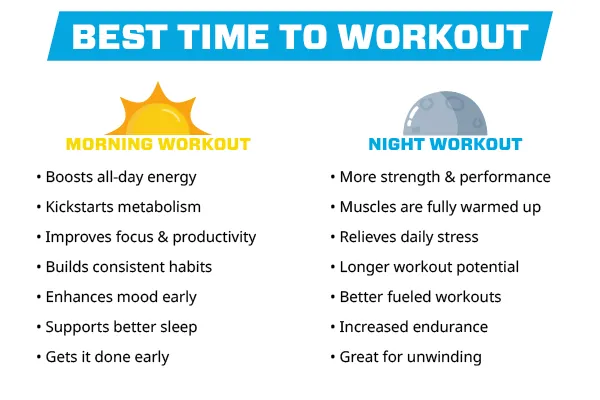
Your specific fitness objective can also dictate the best time to train. If your goal is primarily strength gains, the evening may offer a slight edge due to increased power output. If your goal is stress management and establishing a routine, the morning is often superior because it creates a sense of accomplishment that carries through the entire day.
| Training Goal | Recommended Timing | Why? |
|---|---|---|
| Strength/Power | Evening | Higher muscle temperature |
| Habit Building | Morning | Minimal scheduling conflicts |
| Stress Relief | Morning/Afternoon | Boosts mood for the day |
| Weight Management | Morning | Can increase daily activity levels |
Frequently Asked Questions
Is it better to exercise on an empty stomach?
For most people, training in a fasted state is a matter of personal preference rather than a physiological necessity. If you feel comfortable and have enough energy to perform, fasted morning training can be effective. However, if you feel dizzy or notice your performance drops, a small, easily digestible carbohydrate snack is a better choice to fuel your session.
Does time of day affect muscle growth?
While some studies suggest that afternoon and evening workouts may offer a slight advantage for hypertrophy due to peak muscle strength and hormonal profiles, the difference is relatively minor for most people. The most significant factor for muscle growth remains consistent, progressive resistance training and adequate protein intake, regardless of whether you lift at dawn or dusk.
Can evening workouts cause insomnia?
For the vast majority of individuals, evening exercise doesn’t cause insomnia. However, if you participate in high-intensity training very close to bedtime, the elevated heart rate and adrenaline may make it difficult to fall asleep quickly. If you notice this pattern, try to finish your workout at least ninety minutes before you plan to go to bed to allow your body to cool down.
What is the best time for weight loss?
There’s no “magic” hour for weight loss. The best time is the one that allows you to be the most consistent over the long term. A workout that you actually perform is infinitely more effective for burning calories than a “perfect” workout that you skip because the timing doesn’t fit your lifestyle. Focus on total daily movement and dietary consistency instead.
How do I switch my workout time?
If you want to transition from evening to morning workouts, do so gradually. Start by moving your sessions 15 to 30 minutes earlier every few days. This allows your circadian rhythm to adjust to the new schedule without causing significant sleep deprivation. Ensure you’re also adjusting your bedtime accordingly, as getting enough rest is essential to maintaining your new morning routine.
Warning: Always listen to your body’s signals; if you feel persistent pain, excessive fatigue, or dizziness regardless of the time you choose, consult a healthcare professional to ensure your routine is appropriate for your current health status.
Conclusion
Consistency remains the most important factor in any fitness journey, far outweighing the subtle benefits of timing. Choose the window that feels sustainable for your life, prioritize your recovery, and stay committed to the process. If you find your current timing causes you to miss sessions, don’t hesitate to pivot your schedule to better fit your needs.