
Daily 10-Minute Exercise: A Small Habit with Big Results
A Small Habit with Big Results may sound too simple to work—but that’s exactly why it does. Busy day? Same here. That’s why adding a daily 10-minute exercise habit is a win. You don’t need a gym, fancy clothes, or an hour on the calendar. With a quick workout routine, you can boost energy, improve mood, and build strength in less time than a coffee break.
Below, you’ll find a no-equipment workout you can do every day, plus variations, benefits, and tips to stay consistent. This guide will prove how daily 10-minute exercise really creates big results.
Also See : Upper Body Dumbbell Workout at Home: The Plan
Table of Contents
- Why 10 minutes works (and what it does for your body)
- Your Full-Body 10-Minute Exercise (No Equipment)
- Need variety? Try these 10-minute Exercise formats
- Beginner variations and safety notes
- How to turn 10 minutes into real results
- 7-Day 10-Minute Plan (plug-and-play)
- FAQs
- Conclusion
Why 10 minutes works (and what it does for your body)
Ten minutes of movement raises your heart rate, increases blood flow to your brain, and wakes up sleepy muscles. Over a week, those short sessions add up to more than an hour of purposeful activity—enough to start real change.
Benefits of daily exercise (even 10 minutes):
- Better focus and mood (endorphins kick in)
- Improved heart health and circulation
- Stronger legs, core, and shoulders
- Less stiffness from sitting
- Builds the habit that leads to longer workouts later
Goal: Create a short daily workout you’ll actually do. Consistency beats intensity.
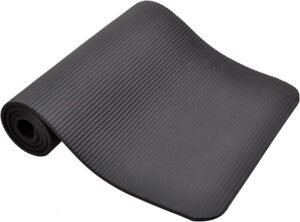
View Thick Yoga/Exercise Mat on Amazon
Your Full-Body 10-Minute Exercise (No Equipment)
Each block is ~2–3 minutes. Move smoothly from one to the next. Rest 10–15 seconds as needed.
1) Warm-up (90–120 seconds)
- March in place – 30 sec
Targets: hips, calves; increases circulation. - Arm circles – 15 sec forward + 15 sec backward
Targets: shoulders, upper back; improves mobility. - Hip hinges (hands on hips, soft knees) – 30 sec
Targets: hamstrings, lower back; preps posterior chain. - Torso rotations – 30 sec
Targets: core, obliques; frees the mid-back.
Why it’s good: Primes joints, lubricates tissues, and reduces injury risk.
2) Cardio burst (2 minutes)
Perform each move for 30 seconds. Beginners use the low-impact option.
- Jumping jacks (or step jacks)
Body parts: calves, shoulders, core; elevates heart rate. - Fast march or high knees (low impact = power march)
Body parts: hip flexors, quads, core; coordination and cardio. - Butt kicks (or standing hamstring curls)
Body parts: hamstrings, glutes; balances quad work. - Skaters (or side steps)
Body parts: glute medius, inner/outer thighs; lateral strength.
Why it’s good: Quick cardio improves endurance and helps fat-burning.
3) Strength circuit (4 minutes)
30 seconds per move, repeat the list once (total 8 blocks). Use slow, controlled reps.
- Bodyweight squats
Targets: quads, glutes, core.
Beginners: sit-to-stand from a chair. - Incline push-ups (hands on wall/counter)
Targets: chest, shoulders, triceps, core.
Advanced: floor push-ups. - Reverse lunges (or split squats holding a chair)
Targets: glutes, quads, balance.
Beginner tip: step back a little less. - Plank hold (knees or toes)
Targets: deep core, shoulders, glutes.
Modify: hands on a couch or table.
Why it’s good: This full body 10 min workout builds strength where daily life needs it—legs for stairs, core for posture, arms for carry strength.
4) Mobility & stretch (90–120 seconds)
- Standing quad stretch – 30 sec/side
Helps: front of thighs; reduces knee tension. - Figure-4 hip stretch (seated or standing) – 30 sec/side
Helps: glutes, piriformis; eases back tightness. - Overhead reach with side bend – 30–40 sec total
Helps: lats, obliques; opens ribs for deeper breathing.
Why it’s good: Mobility finishes the session feeling loose, not tight.
Need variety? Try these 10-minute Exercise formats
A) EMOM (Every Minute On the Minute)
- Minute 1: 12 squats, then rest the remainder
- Minute 2: 8–10 incline push-ups, rest
- Minute 3: 12 alternating lunges, rest
- Minute 4: 30-sec plank, 30-sec rest
- Repeat minutes 1–4, then finish with 2 minutes of brisk marching.
Good for: legs, chest/arms, core—simple and structured.
B) Tabata (4 rounds, 20s on/10s off)
- Round 1: Jumping jacks → rest
- Round 2: Bodyweight squats → rest
- Round 3: Mountain climbers (or slow knee drives) → rest
- Round 4: Plank shoulder taps → rest
Repeat the 4-round set once more.
Good for: heart health, calorie burn, core stability.
C) Strength-Focus Mix
- 40s squats → 20s rest
- 40s push-ups → 20s rest
- 40s hip hinges (“good mornings”) → 20s rest
- 40s side plank (20s/side) → 20s rest
- 40s glute bridge → 20s rest
Good for: posterior chain (glutes/hamstrings), core, shoulders.
Beginner variations and safety notes
- Knees sensitive? Use chair squats and step-back lunges.
- Wrist issues? Do push-ups on fists or incline on a wall.
- Low impact cardio? March, step jacks, and side steps.
- Short on space? March, squats, and wall push-ups fit in any room.
- Form first: Keep ribs down, brace your core, and move with control.
Rule: If you can’t talk, slow down; if you can sing, speed up a little.
How to turn 10 minutes into real results
- Same time daily (after coffee or during lunch).
- Track streaks—a calendar check mark is powerful.
- Pair with protein (Greek yogurt, eggs, tofu) for recovery.
- Step up gradually—add a second 10-minute block 2–3 days a week.
- Celebrate small wins—more energy, better mood, less stiffness.
7-Day 10-Minute Plan (plug-and-play)
- Mon: Cardio burst + core (Section 2 + plank holds)
- Tue: Strength circuit (Section 3)
- Wed: EMOM format (legs/chest/core)
- Thu: Cardio Tabata + stretch
- Fri: Strength circuit (different order)
- Sat: Outdoor walk intervals (1 min brisk / 1 min easy x 5)
- Sun: Mobility flow + light core (bird dogs, dead bug)
FAQs
1) Can 10 minutes really help?
Yes. Research shows short bouts boost heart health, mood, and habit formation. Over time you’ll likely add more minutes because you feel better.
2) What’s the best time of day?
Whenever you’ll stick with it—morning for consistency, lunchtime for a brain reset, or evening to unwind.
3) Do I need equipment?
No. This is a no equipment quick workout. If you own bands or dumbbells, add them for extra challenge.
4) I’m a beginner—where should I start?
Choose low-impact options, keep good form, and use a wall or chair for support. Aim for 6–7/10 effort.
5) What body parts does this plan work?
Legs (squats/lunges), glutes & hamstrings (hinges/bridges), chest/shoulders/triceps (push-ups), and the full core with planks and rotations.
Conclusion
Ten minutes is small—but it’s powerful when done daily. You’ll move easier, think clearer, and feel more confident. Start today and keep the streak alive.


2 Comments