Upper Body Dumbbell Workout at Home: The Plan 2026
Upper body dumbbell workout at home is the fastest way for beginners to build strength in the chest, back, shoulders and arms without leaving the living room.
Want stronger chest, back, and arms without a gym? This upper body dumbbell workout at home is a simple, 20-minute routine built for beginners. You only need a small space and one or two pairs of dumbbells. The plan follows guidance from reputable sources (CDC, ACSM, Mayo Clinic) and focuses on safe form, steady progress, and time-efficient training.
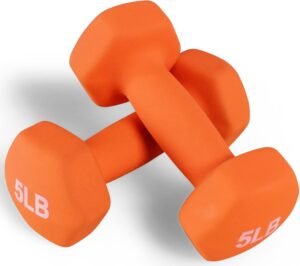
Image: 5 lb dumbbells on a mat
ALT: upper body dumbbell workout at home for beginners
Table of Contents
- Why this upper body dumbbell workout at home works
- Equipment & setup
- Warm-up (3–5 minutes)
- The Workout: chest → shoulders → back → arms → core
- Cool-down (2–4 minutes)
- Weekly plan for beginners
- Safety & form checkpoints
- FAQs
- Get started today
Also See : Weekly Workout Plan for Absolute Beginners
View Dumbbells on Amazon
Why this upper body dumbbell workout at home works
- Beginner-friendly format. Two to three sets per move with reps you can control.
- Real-world efficiency. One compact session trains chest, shoulders, back, arms, and core.
- Evidence-aligned. The CDC recommends muscle-strengthening 2+ days/week; research shows multiple rep ranges work when you push near fatigue with good form.
- Room to grow. Start light, then add reps, sets, or weight as you get stronger.
External references:
- CDC physical activity guidelines (muscle-strengthening ≥ 2 days/week).
- Mayo Clinic guidance on safe technique and gradual progression.
Equipment & setup (USA home)
- Starter weights: one light pair (5–10 lb) and one medium pair (12–20 lb).
- Rule of thumb: pick a load you can lift 12–15 reps with good form; the last 2–3 reps should feel challenging.
- Space-saving tip: an adjustable dumbbell set works well for apartments.
- Frequency: do this upper body dumbbell workout at home 2–3 days/week on non-consecutive days.
Optional internal links:
• See our [Adjustable Dumbbells Compared: Bowflex vs PowerBlock]
• New to training? Try the [Weekly Workout Plan for Absolute Beginners]
This upper body dumbbell workout at home uses two pairs of dumbbells (or one adjustable set) and simple progressions so you can gain strength safely.
Warm-up (3–5 minutes)
- Arm circles and shoulder rolls (30–45 seconds each)
- Wall slides or Y-T raises (no weight)
- Light marching with big arm swings
Why it matters: Warms joints, wakes postural muscles, and primes your shoulders to press and row safely (Mayo Clinic).
The Workout
Format: 2–3 sets each · Reps: 8–12 (10–15 for beginners) · Rest: 45–75 seconds
Goal: Reach near-fatigue with clean form.
Chest
1) Dumbbell Floor Press
Lie on the floor with knees bent. Press dumbbells up, pause, and lower until elbows lightly touch the floor.
Why: Shoulder-friendly pressing without a bench.
Beginner mod: Use the light pair; stop 1–2 reps before form breaks.
2) Incline Push-Up (hands on couch or counter)
Body in a straight line; lower chest to the edge, press away.
Easier: Raise your hands higher (more incline).
Shoulders
3) Seated Dumbbell Overhead Press
Brace your core; press without flaring ribs. Control down.
Beginner mod: Single-arm press while the other hand stabilizes the chair.
4) Dumbbell Lateral Raise
Soft elbows; raise to shoulder height, pause, lower slowly.
Cue: Lead with elbows, not wrists.
Back
5) One-Arm Dumbbell Row (bench/chair support)
Flat back; pull elbow toward the hip, squeeze the shoulder blade, lower slowly.
Beginner mod: Lighter weight, higher reps (10–15).
Form cue: “Chest proud, neck long.”
6) Prone Reverse Fly (on bench or hip hinge)
Raise dumbbells out to a “T,” thumbs slightly up.
Why: Hits rear delts and upper back for posture.
Arms
7) Alternating Biceps Curl
Elbows stay close; avoid swinging. Control the lowering phase.
8) Overhead Triceps Extension (one or two DBs)
Elbows narrow; lower behind the head, press to full lockout.
Tight shoulders? Do triceps kickbacks instead.
Core / Anti-Rotation
9) Dumbbell Dead Bug
On your back, arms up with light DBs. Lower opposite arm/leg while bracing ribs; switch sides.
Apartment-friendly alt: Suitcase Carry — hold one DB at your side and walk 30–45 seconds per arm.
Progression tip: New lifters can grow with one solid set to near fatigue per exercise. As you adapt, add a second or third set, or move up in weight.
Cool-down (2–4 minutes)
- Gentle doorway chest stretch
- Upper-back reach
- Forearm stretch
- Deep nasal breathing: 4 seconds in / 6 seconds out
These ease tension and help you recover for your next upper body dumbbell workout at home (Mayo Clinic).
Weekly plan for beginners
- Mon: Upper body dumbbells (this routine)
- Wed: Lower body + 20–30-minute walk
- Fri: Upper body dumbbells (repeat)
- Weekend: Optional hike, bike, or family park time—counts toward your weekly 150 minutes (CDC)
Safety & form checkpoints
- Keep reps smooth; stop a set when form degrades.
- Maintain a neutral spine (no big back arch on presses).
- Exhale on the effort (press/row/curl).
- Expect mild soreness when starting; progress gradually and rest between days (DOMS is normal).
- If you have a medical condition, check with your clinician first (CDC).
FAQs
Can beginners build muscle with dumbbells at home?
Yes. Training the major upper-body muscles 2–3×/week with sets near fatigue builds strength and lean mass—even with light/moderate loads.
How heavy should I start?
Pick a weight you can lift 12–15 reps with good form where the last reps feel tough. Increase gradually as it gets easier (Mayo Clinic).
How often should I do this routine?
2–3 non-consecutive days/week to meet national muscle-strengthening guidelines (CDC).
Do I need a bench?
No. Floor presses, rows with a chair for support, and seated presses all work in small spaces.
What’s the best rep range?
8–12 is a great middle ground; 10–15 with lighter weights also works if you push near fatigue.
Get started today
You don’t need a gym to get strong. Grab your dumbbells and run this upper body dumbbell workout at home 2–3 times per week. Track your reps, add a little more each week, and you’ll notice the difference—stronger presses, steadier rows, and more defined arms. Your living room just became your most convenient workout spot.

4 Comments