10 Best Ways To Know How Much Water You Really Need Each Day
Staying hydrated sounds simple. Then life happens and the day slips by with only a few sips. The question returns every evening. How much water you really need each day. The answer is easier than you think when you use a few clear rules backed by physiology and practical habits. This guide shows the best way to set your number, adjust for heat and training, and hit your target without obsessing.
You will also find useful, friendly Amazon picks that make consistent hydration almost automatic.
| Outline Headline With LSI Terms For How much water you really need each day | What It Covers |
|---|---|
| Best guide to how much water you really need each day | Simple promise, who it helps |
| Why hydration is best for brain, heart, and performance | Cognitive focus, blood volume, endurance |
| Water balance explained for beginners | Intake vs output, sweat, urine, breath |
| Daily water needs by body weight | Simple grams per kilogram and cups rule |
| Climate, altitude, and season factors | Heat index, winter dryness, mountain air |
| Best for active people and athletes | Sweat rate, pre and post workout intake |
| Office workers and students hydration plan | Sedentary needs, screen time dryness |
| Pregnancy and breastfeeding intake | Extra fluid targets, safety notes |
| Seniors hydration best practices | Thirst blunting, medications, reminders |
| Kids and teens water requirements | Age ranges, sports days, school bottles |
| Signs you are underhydrated | Urine chart, headaches, fatigue |
| Can you drink too much water | Hyponatremia basics, smart electrolyte use |
| Coffee, tea, and milk in your water budget | Diuretic myths, total fluid concept |
| Fruit and vegetables water content | Hydrating foods to count |
| Electrolytes when and why | Sodium, potassium, magnesium basics |
| Best timing schedule across the day | Wake up, pre meal, workout, evening |
| How to measure your personal sweat rate | Scale method, practical example |
| Morning body weight checks | Dehydration cue, safe loss limits |
| Travel and flights hydration tips | TSA bottles, plane dryness, jet lag |
| Halal friendly hydration choices | Label checks, clean ingredients |
| Smart bathroom rule for the real world | 4 to 7 clear to pale trips idea |
| Water quality and filtration options | Taste, chlorine, contaminants basics |
| Motivational tricks that actually work | Habit stacking, streaks, alarms |
| Budget friendly hydration toolkit | Reusables, filters, powders |
| Quick reference tables and FAQs | Fast decisions, myth busting |
Best guide to how much water you really need each day
Water needs are personal. They depend on body size, activity, climate, and health status. Instead of a single magic number, use a base range with simple adjustments. Most healthy adults do well with 30 to 35 milliliters of fluid per kilogram of body weight per day from all sources. That includes plain water, tea, milk, and watery foods. Then add more for heat or workouts.
A 70 kilogram person would start near 2.1 to 2.5 liters. If you prefer cups, that is about 9 to 11 cups. You will fine tune below.
Why hydration is best for brain, heart, and performance
- Brain: Mild dehydration raises perceived effort and reduces attention. Sip consistently to keep reaction time sharp.
- Heart: Fluids maintain blood volume which supports oxygen delivery and temperature control.
- Performance: Losing more than 2 percent of body weight from water often lowers power and speed. Runners, lifters, and hard workers feel this drag quickly.
Water balance explained for beginners
Your body loses water through urine, stool, sweat, and even breathing. You replace it with drinks and foods. Humidity, wind, altitude, caffeine habits, and salty meals nudge the scale. That is why a flexible target always beats a rigid rule.
Daily water needs by body weight
Use one of these quick methods.
Method A: milliliters per kilogram
- 30 to 35 ml per kg per day for most adults
- Example: 80 kg x 30 ml = 2400 ml or about 10 cups
Method B: cups by body weight
- 0.5 cup per 10 pounds of body weight as a base, then adjust for activity
- Example: 180 pounds gives about 9 cups base
If you eat hydrating foods like soups and fruit, your plain water need can be a bit lower. If you eat salty, high protein meals, you might need a bit more.
Climate, altitude, and season factors
- Hot and humid: Sweat pours and evaporation is slower. Add 2 to 4 cups across the day.
- Cold and dry: Winter air is dry and thirst hides. Add 1 to 2 cups and use lip balm as a reminder.
- High altitude: Faster breathing pulls moisture from lungs. Add 2 cups and include electrolytes on hikes.
Best for active people and athletes
Your sweat rate is the key. Here is a simple test.
- Weigh yourself without clothes before training.
- Train for one hour. Track fluid you drink.
- Weigh again after towel drying.
- Weight loss in kilograms plus liters you drank equals sweat loss in liters.
Replace about 75 to 125 percent of that loss over the next two to four hours. For most workouts, aim for 400 to 800 ml per hour of activity, sipped in small amounts.
Helpful bottle: Hydro Flask Standard Mouth Water Bottle keeps drinks cold during long sessions.
Office workers and students hydration plan
Sitting all day dries you out quietly thanks to air conditioning and screen time. Use a bottle with time markers and a chime.
Try Hydracy Water Bottle with Time Marker. Fill it twice and you are likely at your base goal.
Pregnancy and breastfeeding intake
Expecting mothers often need about 300 ml to 500 ml more per day. Breastfeeding mothers may need 700 ml to 1000 ml extra depending on milk production. Small, frequent sips and a bottle in every room help. Always consult your clinician for individual guidance.
Seniors hydration best practices
Thirst can dull with age and some medications increase fluid loss. Build routine sips with meals and medicines. Use lighter bottles for grip comfort. A bedside carafe is a friendly reminder.
Good pick: Brita Large Water Filter Pitcher for clean, better tasting water that encourages drinking.
Kids and teens water requirements
General daily targets including plain water and other drinks:
- Ages 4 to 8: about 5 cups
- Ages 9 to 13: about 7 to 8 cups
- Ages 14 to 18: about 8 to 11 cups
Sports days need extra. Send a labeled bottle to practice.
Kid friendly option: CamelBak Eddy+ Kids Water Bottle.
Signs you are underhydrated
- Urine is dark yellow or strong smelling
- Headache, dry mouth, or dizziness
- Fatigue or brain fog mid afternoon
- Fewer than four bathroom trips in a day
A quick fix is 2 cups of water, a pinch of salt with a snack, and a short walk.
Can you drink too much water
Yes. Rapid intake of very large volumes can lower blood sodium, a condition called hyponatremia. It is rare in daily life but sometimes happens in long endurance events. Sip steadily and include electrolytes for sessions longer than 90 minutes.
Electrolyte helper: Nuun Sport Electrolyte Tablets.
Coffee, tea, and milk in your water budget
Moderate coffee and tea count toward hydration for most people. The mild diuretic effect does not cancel the fluid you drink. Milk hydrates well due to electrolytes and protein. Sweetened drinks add calories, so use them sparingly unless fueling training.
Fruit and vegetables water content
Food can supply 20 to 30 percent of daily fluid. Use these hydrating heroes.
- Watermelon, oranges, strawberries, cucumbers
- Zucchini, tomatoes, bell peppers, soups
- Oats cooked with milk or water
Electrolytes when and why
Sodium is the primary electrolyte lost in sweat. Potassium and magnesium matter too. Use electrolytes when you sweat heavily, train for longer than 60 to 90 minutes, or work in hot environments. On regular days, a pinch of salt on meals and whole foods will do.
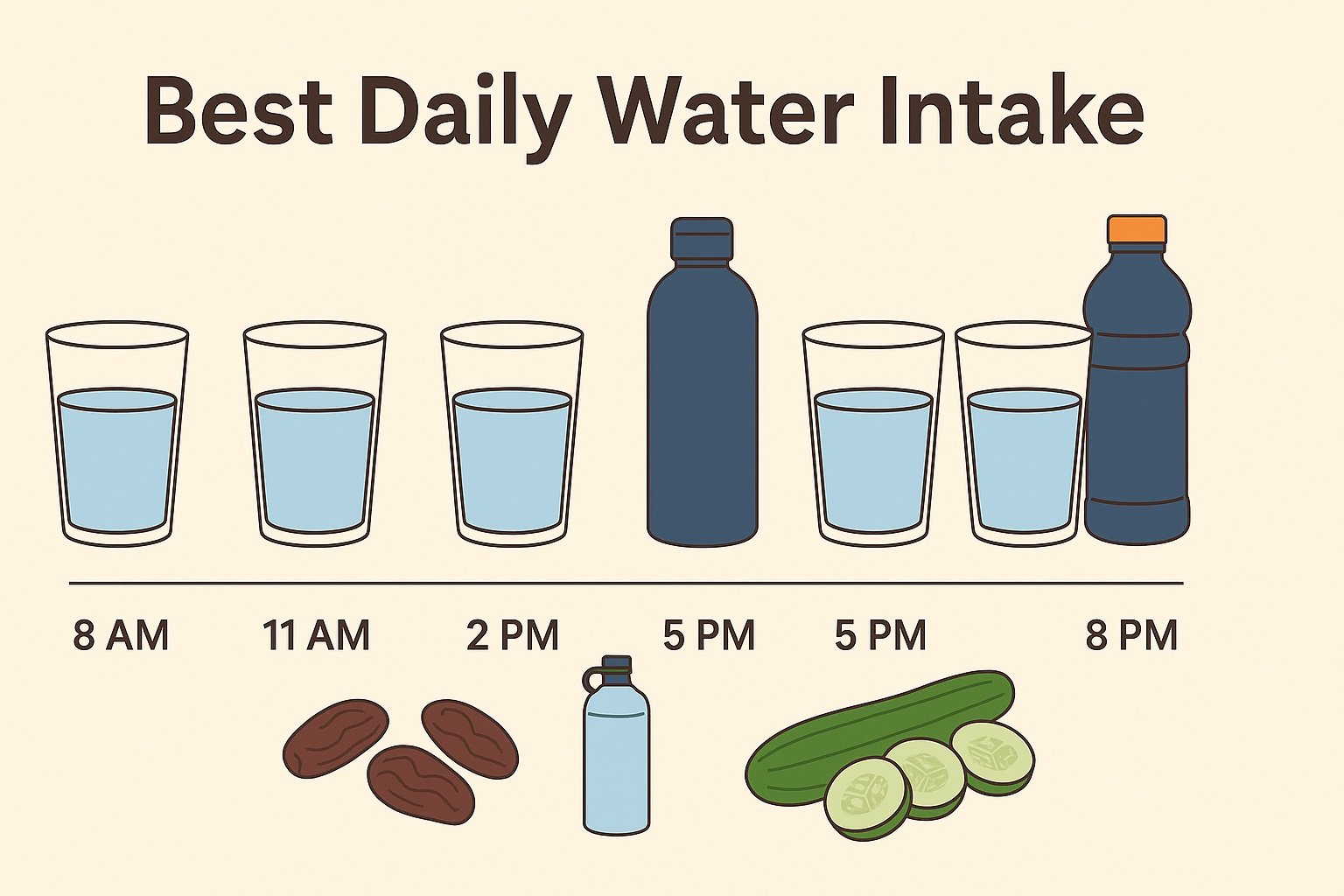
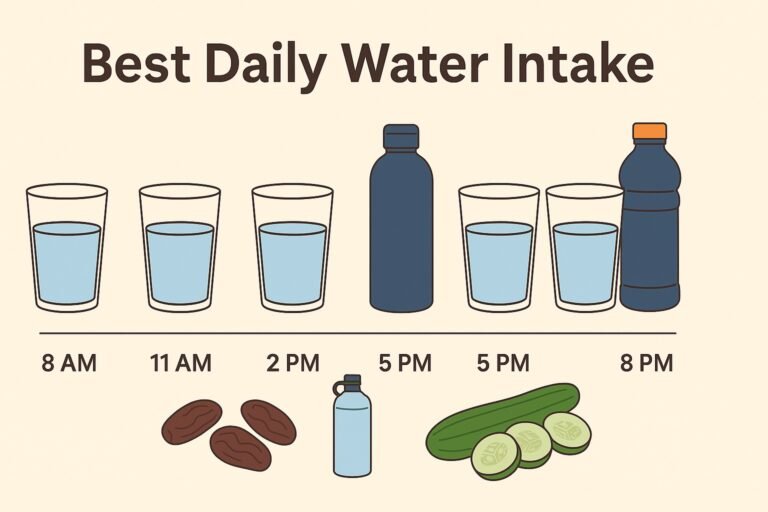
Best timing schedule across the day
- On waking: 1 cup to shake off overnight dryness
- Pre meal: 1 cup about 15 minutes before breakfast, lunch, and dinner
- During workouts: sip 2 to 3 mouthfuls every 10 to 15 minutes
- After workouts: 2 cups plus electrolytes as needed
- Evening: slow sips, not chugging, to protect sleep
How to measure your personal sweat rate
Let us run a worked example.
- You drink 500 ml during a 60 minute run.
- Pre run body weight is 70.0 kg.
- Post run body weight is 69.0 kg.
- Loss is 1.0 kg plus 0.5 liters consumed equals 1.5 liters sweat per hour.
- Aim to drink roughly 0.8 to 1.2 liters during similar sessions, adjusted by comfort.
A soft flask or straw lid can help you sip more naturally. Try Hydro Flask Straw Lid.
Morning body weight checks
If you wake up more than 1 percent lighter than your usual baseline and your urine is dark, you are probably underhydrated. Increase fluids early, especially if training that day.
Travel and flights hydration tips
Cabin air is dry and you lose fluid with every breath. Pack an empty bottle and fill after security. Ask for water with every service. Avoid heavy alcohol on long flights.
A compact filter bottle is handy in cities. Consider Brita Insulated Filtered Water Bottle.
Halal friendly hydration choices
Stick to plain water, sparkling water, milk, and juices with clear ingredient lists. For powders and tablets, confirm there is no alcohol in flavor carriers and avoid gelatin unless certified halal. Many electrolyte products are plant based and alcohol free.
Smart bathroom rule for the real world
Most hydrated adults urinate about 4 to 7 times per day with pale straw color. Use this as a street smart gauge alongside your cup target.
Water quality and filtration options
Good taste encourages more drinking. Filters reduce chlorine odor and some contaminants. Activated carbon pitchers are an easy start. Under sink systems add convenience for families.
Consider Brita Elite Replacement Filters to improve taste and consistency.
Motivational tricks that actually work
- Pair sips with existing habits like opening email or finishing a set at the gym
- Use a bottle with time markers for gentle pacing
- Put two bottles at your desk and promise to finish them by dinner
- Set three phone alarms labeled Drink Water, Breathe, Reset
- Track streaks for 7, 14, and 30 days
Budget friendly hydration toolkit
- One durable bottle beats dozens of plastic cups
- A pitcher filter cuts cost and plastic waste
- Buy electrolyte tablets in bulk for hot months
- Flavor your water with lemon slices, mint, or cucumber
Smart kit example: Brita Water Filter Pitcher With 1 Standard Filter.
Quick reference tables
Daily starting target by body weight
| Body Weight | Start With Fluid Per Day |
|---|---|
| 50 kg | 1.5 to 1.8 liters |
| 60 kg | 1.8 to 2.1 liters |
| 70 kg | 2.1 to 2.5 liters |
| 80 kg | 2.4 to 2.8 liters |
| 90 kg | 2.7 to 3.2 liters |
| 100 kg | 3.0 to 3.5 liters |
Workout add-ons
| Session Length | Add This Fluid |
|---|---|
| Up to 45 minutes light | 0.5 liter |
| 45 to 75 minutes moderate | 0.5 to 1.0 liter |
| 75 to 120 minutes hard | 0.8 to 1.5 liters plus electrolytes |
| Over 120 minutes | 1.0 to 2.0 liters plus electrolytes |
Frequently Asked Questions
Do sparkling water and flavored seltzers count
Yes, as long as sugar and alcohol are not added. Some flavor essences use trace alcohol in processing but finished product is typically alcohol free. Choose reputable brands and check labels if this is a concern.
Is the 8 cups rule still valid
It is a simple average. For many adults it is fine on cool, low activity days. Larger bodies, hot climates, or training days need more.
Can I hydrate only during meals
Spreading intake works better for energy and digestion. Aim for regular sips between meals too.
What color should my urine be
Pale straw most of the day is the goal. Dark apple juice color suggests you need more fluid.
Do I need sports drinks for short workouts
Usually no. Plain water is enough for sessions under an hour unless it is very hot.
How do high protein diets change water needs
Protein increases urea production which the body clears in urine. Add 1 to 2 cups across the day when protein is high.
Conclusion: Your Best Daily Water Plan In One Minute
- Set your base using 30 to 35 ml per kilogram per day.
- Add 2 to 4 cups for heat, altitude, or long training.
- Check urine color and bathroom frequency to fine tune.
- Use a reliable bottle, a simple schedule, and light electrolytes when you sweat.
Hydration can be simple and consistent. Choose tools you like, make sipping automatic, and enjoy better focus, stronger workouts, and steadier energy every single day.
Helpful gear at a glance
Best Way to Read a Nutrition Label in Under One Minute



One Comment