Best Macro Counting Made Simple Without the Stress
If you’ve ever tried to manage your food intake and felt overwhelmed by numbers, labels, and apps you’re not alone. Counting macros (short for macronutrients) can be powerful for weight loss, muscle gain, and energy, but it often feels like a full-time job. Good news? It doesn’t have to be!
In this guide, you’ll discover the best macro counting approach for beginners one that’s simple, sustainable, and stress-free. Plus, we’ll recommend helpful tools (including top-rated Amazon products) to make macro tracking a breeze.
Why Macro Counting Is the Best for Body Goals
Macro counting is about tracking the three macronutrients your body needs:
- Protein – for muscle growth and repair
- Carbohydrates – for energy
- Fats – for hormone balance and brain health
Unlike calorie counting, macro counting gives you a better understanding of food quality and balance. It helps you build meals that fuel your goals whether that’s fat loss, muscle building, or boosting performance.
Benefits of Macro Counting:
- Encourages whole, nutrient-rich food choices
- Provides flexibility you can eat what you love
- Helps optimize body composition, not just weight
- Supports long-term healthy habits
Best Way to Calculate Your Macros (Without a Math Degree)
No need to stress over equations or complex formulas. You can estimate your macros in three easy steps:
Step 1: Find Your Calorie Needs
Use an online PTC (Protein Target Calculator) calculator to estimate how many calories your body burns daily.
👉 Try the Precision Nutrition PTC Calculator
Step 2: Set Your Macro Ratios
Based on your goal:
| Goal | Protein | Carbs | Fats |
|---|---|---|---|
| Fat Loss | 40% | 30% | 30% |
| Maintenance | 30% | 40% | 30% |
| Muscle Gain | 35% | 45% | 20% |
Step 3: Convert Percentages to Grams
There are:
- 4 calories per gram of protein
- 4 calories per gram of carbs
- 9 calories per gram of fat
Example: If you need 2,000 calories/day and choose 30% protein:
- 2,000 × 0.30 = 600 calories from protein
- 600 ÷ 4 = 150g protein/day
Repeat for carbs and fats. Done!
Best Amazon Tools to Make Macro Tracking Easy
Macro counting gets easier when you have the right tools on hand. These Amazon finds can help you stay consistent with less stress and more success:
Digital Food Scale
A food scale is the #1 tool for accurate macro tracking.
👉 Try Etekcity Food Kitchen Scale – Sleek, reliable, and highly rated.
Meal Prep Containers
Keeping food portioned out makes tracking effortless.
👉 Try Prep Naturals Glass Meal Prep Containers
Macro-Friendly Protein Powder
Add protein without much fat or carbs.
👉 Try Optimum Nutrition Gold Standard 100% Whey Protein
Smart Nutrition Tracker
Ditch the notebook. Let tech do the work.
👉 Try Renpho Smart Food Scale with App
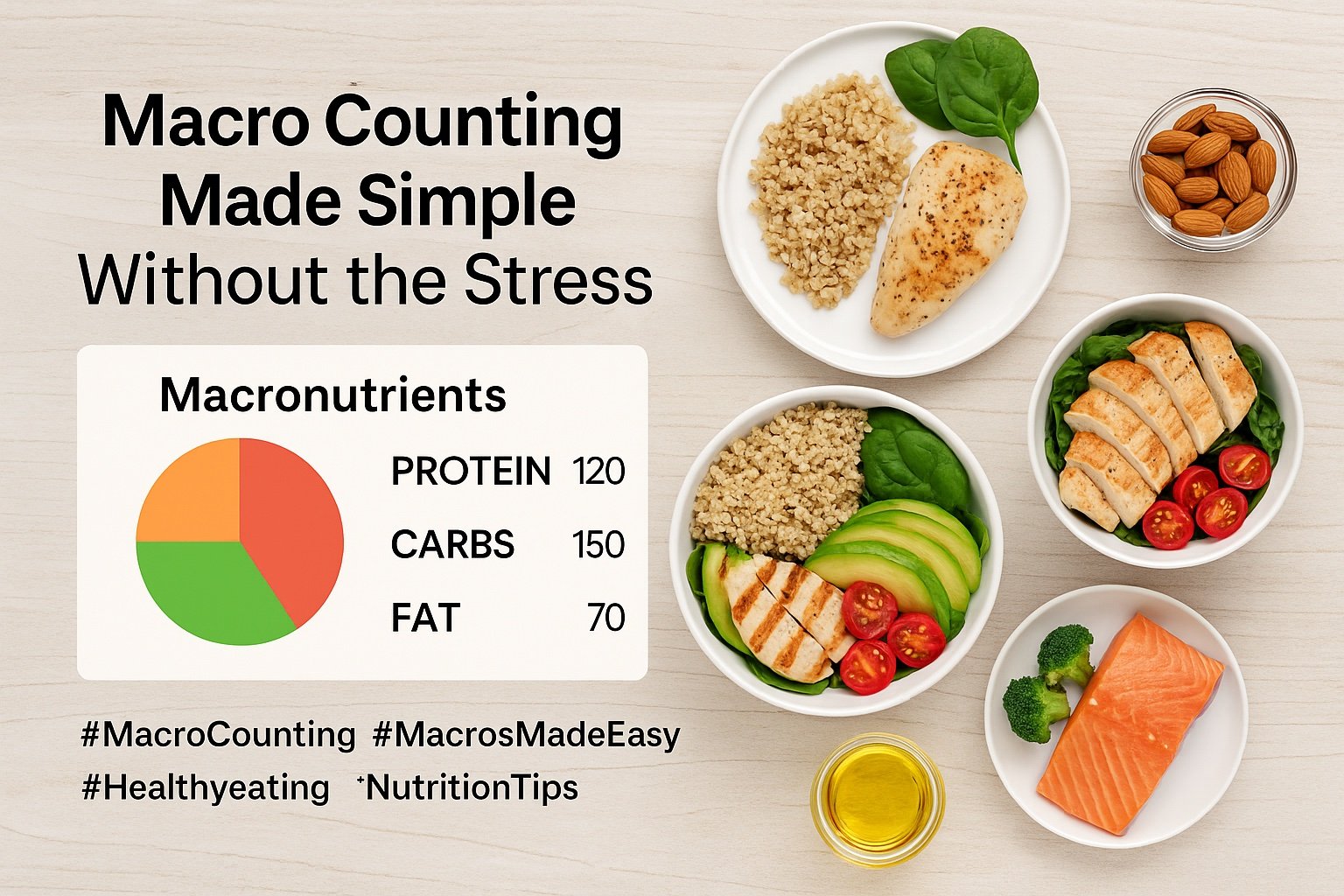
Best for Beginners: The “Macro Plate” Visual Method
If numbers make your head spin, try this visual macro approach:
- ½ of your plate = veggies + some fruit (carbs)
- ¼ of your plate = protein (chicken, fish, tofu)
- ¼ of your plate = whole grains or starches
- Add 1-2 tbsp of healthy fats (olive oil, avocado, nuts)
This plate method is based on macro balance and can help you eyeball portions without apps or calculations.
Top Macro-Friendly Foods to Keep Stocked
When your fridge and pantry are loaded with macro-balanced staples, life gets easier.
Best Proteins
- Chicken breast, ground turkey
- Greek yogurt, cottage cheese
- Eggs and egg whites
- Tempeh, tofu
- Zwan Luncheon Halal Meat, Chicken/Beef, 12 Ounce
Best Carbs
- Quinoa, brown rice, oats
- Sweet potatoes, bananas
- Berries, apples
- Bob’s Red Mill Organic Old-Fashioned Rolled Oats
Best Fats
- Avocados, nuts, chia seeds
- Extra virgin olive oil
- Nut butters (no added sugar)
- Nutiva Organic Chia Seeds
Best Tips to Make Macro Counting Sustainable
Macro tracking doesn’t have to be all or nothing. Follow these tips to stay on track without burnout:
- Start slow – Track just protein for the first week
- Batch cook meals – Use Sunday to prep for the week
- Repeat meals – Less variety = less mental load
- Don’t aim for perfection – Be accurate, not obsessive
- Eat out smart – Check menus or use a macro tracker app like MyFitnessPal
Best Apps to Help You Track Macros Stress-Free
Want automation? These apps are your best friend:
👉 MyFitnessPal – Massive food database, barcode scanner
👉 Lose It! – Great interface, easy for beginners
👉 Cronometer – Best for nutrient-dense eating
👉 MacrosFirst – Designed specifically for macro counters
Macro Counting Made Simple Without the Stress
To sum it all up, the best macro counting method is one that fits your lifestyle and reduces overwhelm. You don’t need to weigh every bite forever or carry a calculator to dinner. Focus on consistency over perfection, and let tools and habits support you.
With the right macros mindset, reliable tracking tools, and nutrient-packed foods, you’ll crush your goals without losing your mind.
Frequently Asked Questions
Do I need to count macros forever?
No! Many people only track for a few weeks or months until they develop a feel for portion sizes and balance.
Can I eat carbs and still lose weight with macros?
Absolutely. Carbs are not your enemy. With proper macro balance, you can lose fat while still enjoying carbs.
What if I eat out often?
Many restaurants post nutrition info online. Use a tracker app to estimate. Don’t aim for perfection just stay close.
Is macro counting better than calorie counting?
Yes. Macro counting focuses on food quality and nutrient balance, not just total calories.
How much protein do I need daily?
A common guideline is 0.8–1g of protein per pound of body weight, depending on your goal.
Can vegetarians or vegans count macros?
Yes! Plant-based eaters can thrive with macro tracking by focusing on legumes, tofu, seeds, whole grains, and plant proteins.
Conclusion: Say Goodbye to Confusion, Hello to Control
Macro counting doesn’t have to be intimidating. With the best macro tracking tools, simple strategies, and balanced meal planning, you’ll have a proven, flexible way to reach your health and fitness goals.
Remember, you’re not just eating to lose weight you’re fueling your life. Make it count. Make it macro-smart without the stress.